Understanding the Valais Blacknose Breed.
Breed Standards, Generations & the Wolf Mountain Approach
The Valais Blacknose Sheep is one of the most distinctive and sought-after sheep breeds in the world, admired for its striking appearance, exceptional temperament, and rich Swiss heritage. Whether you are new to the breed or looking to deepen your understanding, this page is designed to provide an overview of the Valais Blacknose, including its history, breed standards, desirable characteristics, and the breed-up program used to establish and advance the breed in North America. You’ll also learn about the generations that make up the breed-up process and the principles that guide our breeding decisions at Wolf Mountain Farm as we work to produce sheep that honor the breed’s heritage while contributing to its future.
-
The Valais Blacknose Sheep originated in Switzerland and are considered one of the most distinctive and sought-after sheep breeds in the world. Because importing live Valais Blacknose sheep into the United States is not currently permitted, breeders have relied on imported embryos, semen, and a structured breed-up program to expand and preserve the breed in North America.
The breed-up program begins by breeding a purebred Valais Blacknose ram to a foundation ewe of another approved breed. Each successive generation is then bred back to a purebred Valais Blacknose ram, increasing the percentage of Valais genetics with every generation.
As the generations progress, sheep become increasingly consistent in their appearance, wool characteristics, markings, and overall breed type. Through careful selection and breeding, the goal is to produce animals that closely reflect the Valais Blacknose breed standard while continuing to strengthen the breed’s presence in North America.
-
The breed-up program increases the percentage of Valais Blacknose genetics with each successive generation. As generations advance, sheep should become more consistent in their appearance, breed type, wool characteristics, and overall resemblance to the Valais Blacknose standard.
Generation | Percentage Valais Blacknose
F1 | 50%
F2 | 75%
F3 | 87.5%
F4 | 93.75%
F5 | 96.875%
F6 | 98.4375%
F7 | 99.21875%
Purebred | 100%
In the United States, F5 sheep are commonly referred to as Domestic Purebreds because they meet the percentage requirements established through the breed-up program. While generation is an important indicator of how closely a sheep aligns genetically with the Valais Blacknose breed, individual quality remains an important consideration when evaluating breeding stock.
-
Higher-generation Valais Blacknose sheep are generally more valuable because they are genetically closer to the original breed and tend to show greater consistency in breed type, wool characteristics, markings, horn development, temperament, and overall resemblance to the Valais Blacknose standard.
One of the breed’s most distinctive and desirable traits is its exceptionally docile nature. Higher-generation sheep and purebreds are often known for their calm, friendly dispositions, making them enjoyable to work with and appealing to both breeders and hobby farmers. This gentle temperament, combined with their unique appearance, contributes to strong demand.
In North America, establishing and advancing the breed requires a significant investment due to complex and costly import regulations. Direct importation of live Valais Blacknose sheep into the United States is prohibited, so breeders must rely on importing frozen embryos and semen, which is the most expensive pathway for introducing new genetics.
Reaching higher generations requires years of selective breeding, planning, time, and investment. The gene pool remains relatively small, and breeding often involves artificial insemination and embryo transfer procedures that require specialized laparoscopic techniques and experienced veterinarians. These factors make breeding more intensive and costly than with many other sheep breeds.
Because of these challenges, higher-generation sheep are often rarer and in greater demand.
However, generation is only one factor in determining value. Conformation, structural correctness, wool quality, markings, horn development, temperament, pedigree, and overall breed character are all important measures of an individual sheep’s quality.
-
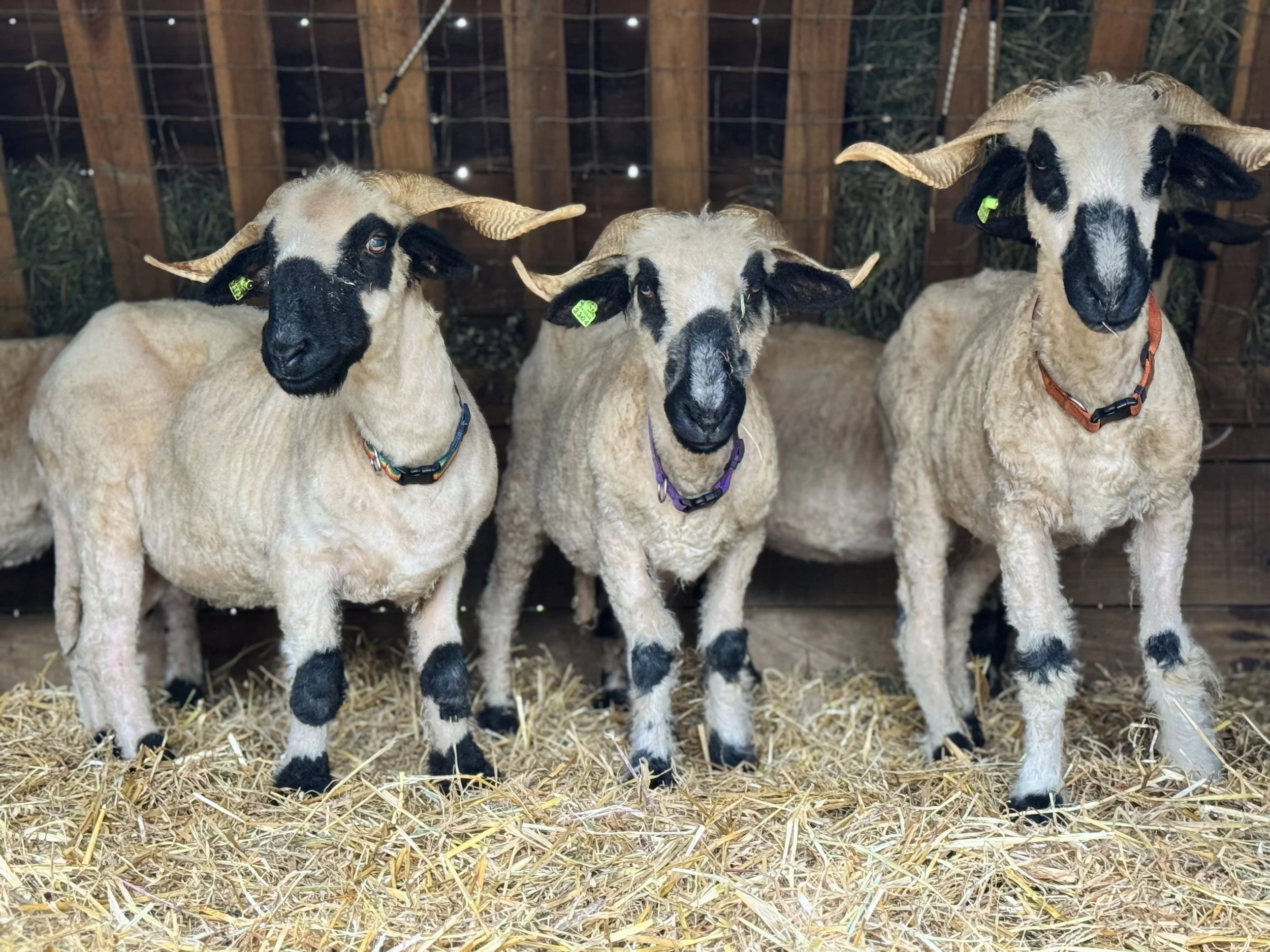
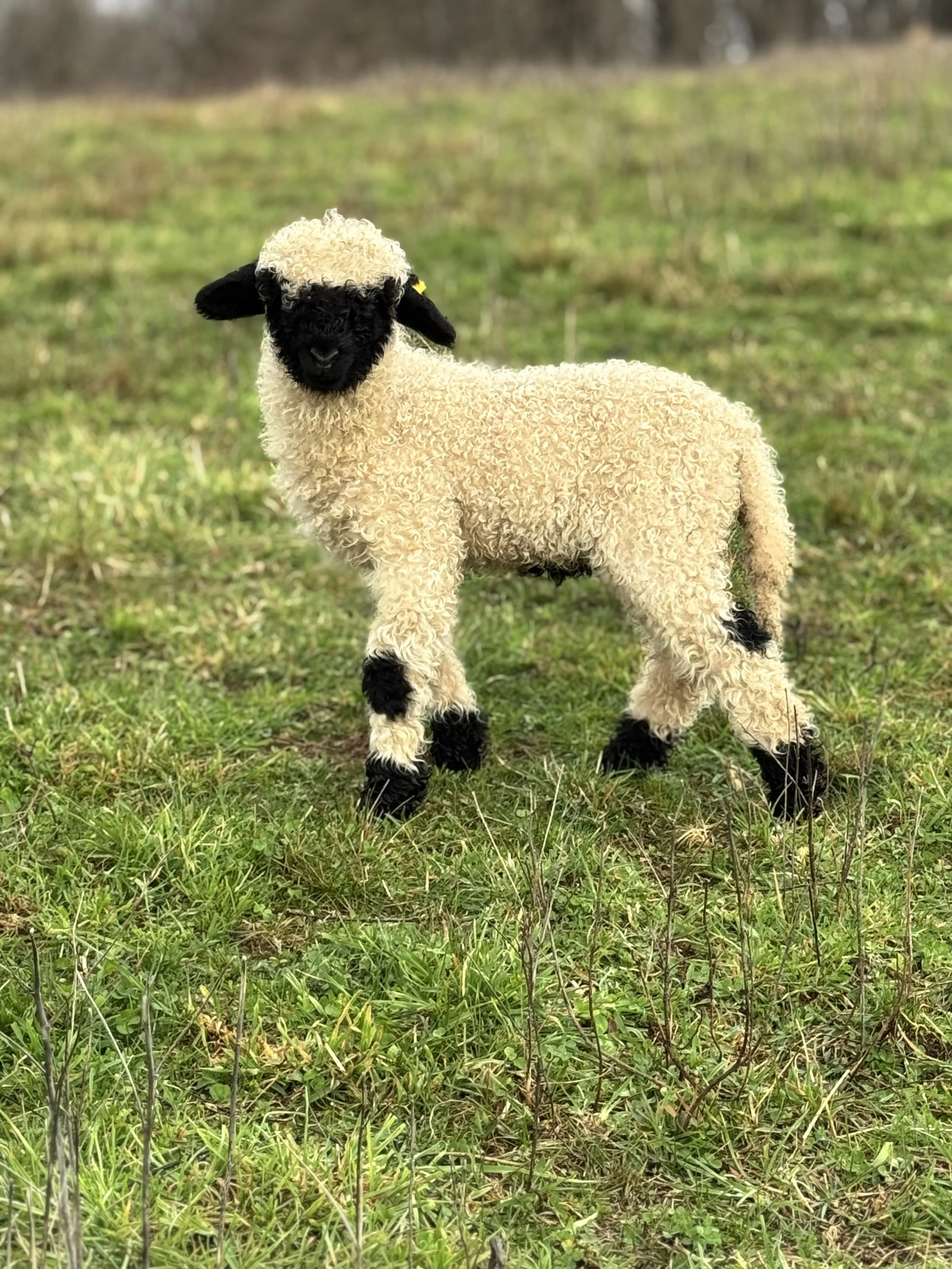
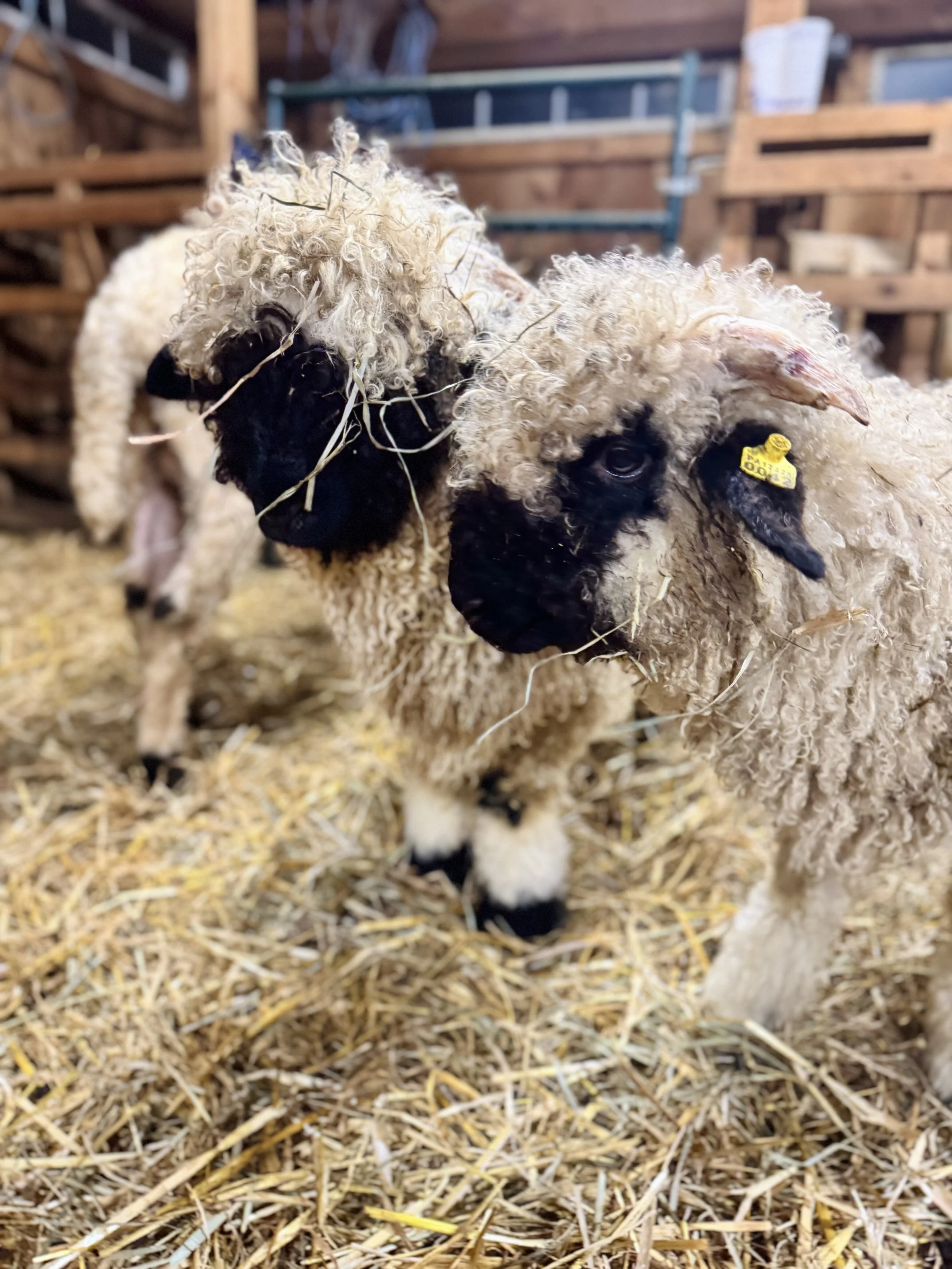
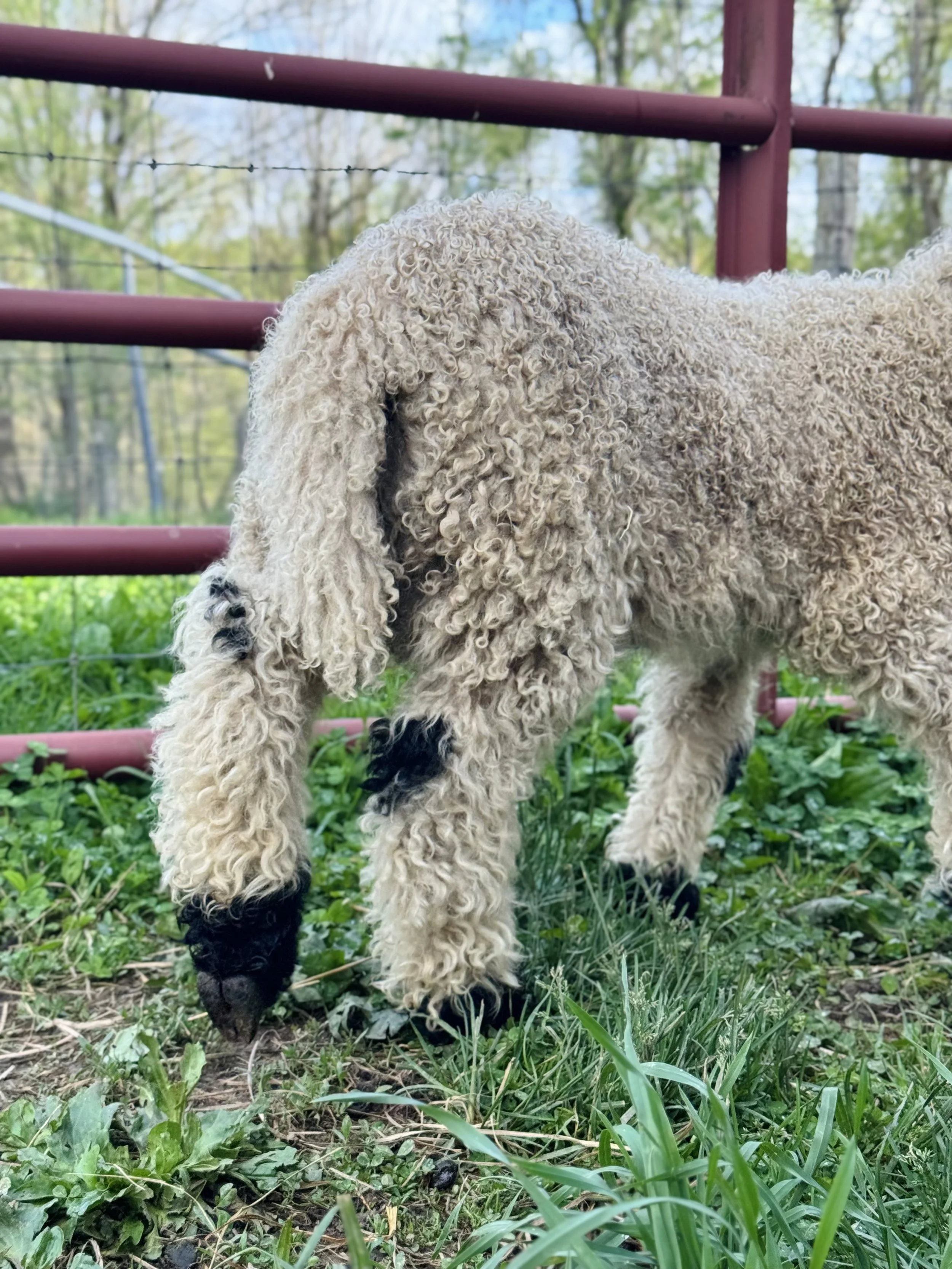
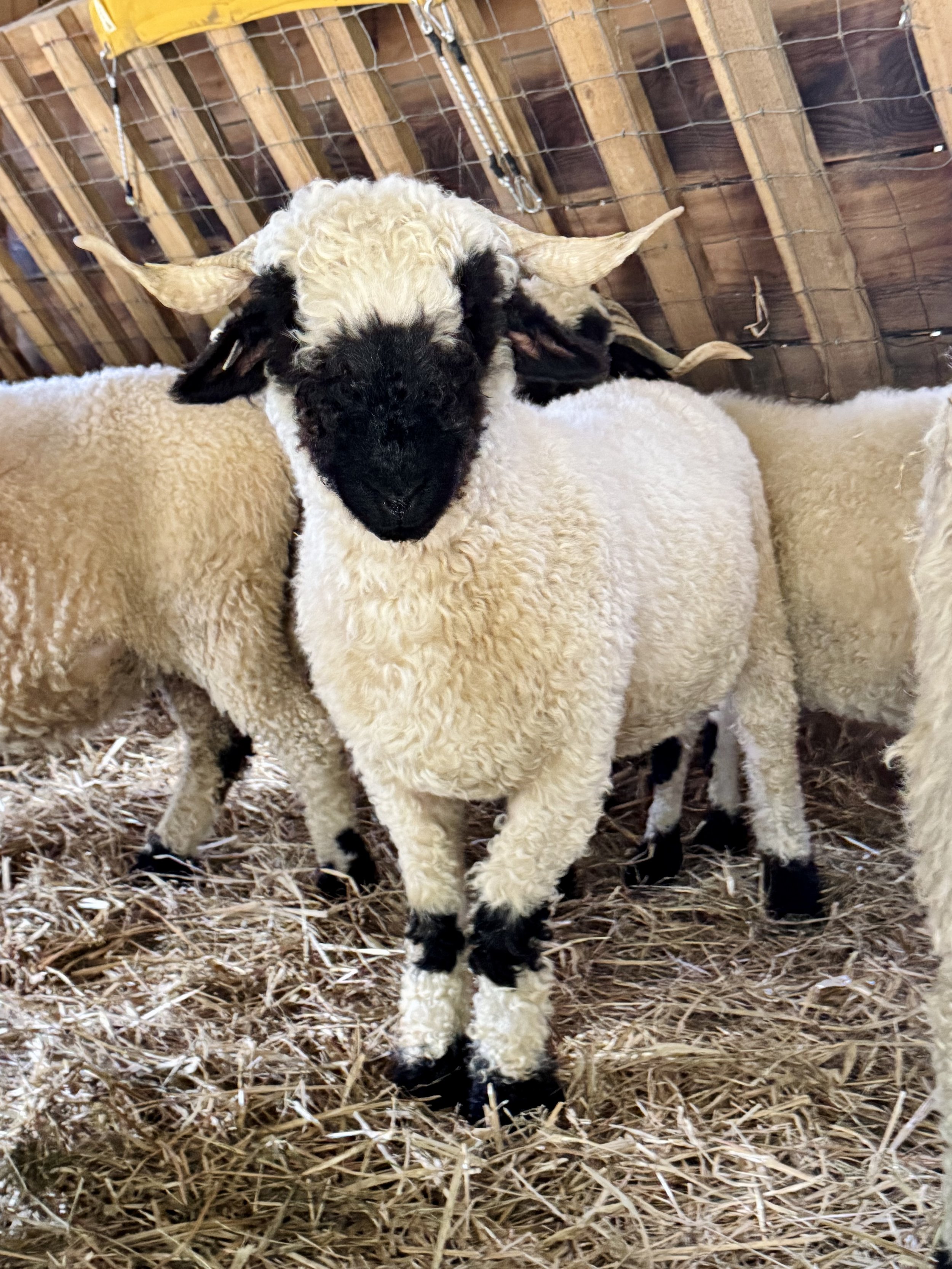
The Valais Blacknose is known for its distinctive appearance, and proper markings are an important part of the breed standard. Ideally, sheep should display a full black face extending from the nose toward the eyes, black ears, black knee markings, black hock markings, and black feet. These markings should be bold, well-defined, and contribute to the sheep’s overall breed character.
Female sheep should also have a black tail spot beneath the tail, while tail spots are not permitted in males. Both rams and ewes should have well-developed helical (spiral) horns. Rams typically carry heavier, more massive horns with a stronger curl, while ewe horns are generally lighter and more refined.
Wool is another defining characteristic of the breed. The ideal Valais Blacknose exhibits dense, uniform wool coverage across the body, head, and legs. The wool should form well-defined curls and extend down the legs toward the hooves, creating the distinctive appearance for which the breed is known.
While proper markings are important, they are only one component of quality. Conformation, structural soundness, horn development, wool quality, temperament, and overall breed type must all work together to produce an exceptional Valais Blacknose sheep.
-
At Wolf Mountain Farm, our goal is not simply to produce more sheep—it is to produce sheep that move the breed forward.
Every breeding decision we make is guided by a commitment to quality, consistency, and long-term improvement. We carefully evaluate conformation, structural correctness, wool quality, breed character, markings, horn development, temperament, and pedigree when selecting animals for our breeding program. We believe exceptional sheep are the result of thoughtful planning and generations of selective breeding.
While advancing generations is an important part of the breed-up process, we are equally focused on producing sheep that possess the complete package of traits that make the Valais Blacknose breed so remarkable. Our goal is to raise sheep that are not only beautiful to look at, but also capable of making a meaningful contribution to the farms and breeding programs they join.
We are committed to responsible stewardship of the breed and believe that lasting progress comes from careful selection, high standards, and a dedication to doing things the right way. Every animal we retain, every breeding we plan, and every sheep we offer for sale reflects that commitment.
-
The Valais Blacknose Sheep originated in the canton of Valais in southwestern Switzerland, where they have grazed the rugged Alpine mountains for centuries. Historical records indicate the breed dates back to at least the 15th century, though the modern breed was officially recognized in Switzerland in 1962 and incorporated into the Swiss Sheep Breeding Association in 1964. (vbsana.com)
Developed in one of Europe’s most challenging mountain environments, the Valais Blacknose became known for its hardiness, sure-footedness, and ability to thrive in the harsh conditions of the Swiss Alps. The breed’s distinctive black markings, impressive horns, and abundant curly wool made it one of the most recognizable sheep breeds in the world. (vbsana.com)
For much of its history, the breed remained almost exclusively within Switzerland. Interest in the Valais Blacknose eventually expanded internationally, leading to the establishment of breeding programs in the United Kingdom and later North America. Because live Valais Blacknose sheep cannot be imported into the United States, breeders have relied on imported embryos, semen, and carefully managed breed-up programs to establish and advance the breed while preserving the characteristics that make it unique. (vbsana.com)
Today, the Valais Blacknose is admired around the world for its striking appearance, friendly temperament, and rich Swiss heritage. From the steep mountain pastures of the Alps to modern breeding programs across the globe, the breed continues to capture the attention of shepherds and livestock enthusiasts alike. (vbsana.com)
-
Valais Blacknose sheep are among the rarest and most sought-after sheep breeds in North America. Their value reflects not only their unique appearance and exceptional temperament, but also the significant investment required to establish and advance the breed outside of Switzerland.
One of the primary factors influencing price is the limited availability of genetics. Because live Valais Blacknose sheep cannot be imported into the United States, breeders must rely on imported frozen embryos and semen to introduce new bloodlines. These genetics are expensive to acquire and often involve substantial transportation, importation, and veterinary costs.
Advancing the breed through the breed-up program also requires a considerable investment of time. Each successive generation must be carefully planned and produced over multiple years, making higher-generation sheep the result of long-term dedication and selective breeding. A sheep’s value often reflects not only its current generation, but also the generations of planning and selection that made it possible.
Breeding Valais Blacknose sheep frequently involves specialized reproductive procedures such as artificial insemination and embryo transfer, which require experienced veterinarians and specialized equipment. These techniques help preserve and advance valuable genetics but also contribute to the overall cost of producing quality breeding stock.
The breed’s population in North America remains relatively small, and demand continues to grow as more breeders and livestock enthusiasts discover the Valais Blacknose. Their distinctive appearance, friendly temperament, and limited availability have created strong demand for high-quality animals.
While generation is an important factor, not all Valais Blacknose sheep are equal. Conformation, structural correctness, wool quality, markings, horn development, pedigree, temperament, and overall breed character all influence an individual sheep’s value. The most sought-after animals are those that combine advanced generations with exceptional quality and a strong ability to contribute to future breeding programs.
-
Often referred to as the “cutest sheep in the world,” Valais Blacknose sheep are known for their distinctive appearance, friendly personalities, and exceptional temperament. While their striking black-and-white markings and curly wool may be what first captures people’s attention, it is their calm, personable nature that often makes owners fall in love with the breed.
Like all sheep, Valais Blacknose require proper nutrition, fencing, routine health care, parasite management, hoof trimming, and annual shearing. However, their basic care requirements are similar to those of many other sheep breeds, making them a practical option for both experienced shepherds and those who are new to sheep ownership.
Whether your goal is to establish a breeding program, maintain a small flock, enhance an agritourism operation, or simply enjoy raising a unique and rewarding breed, Valais Blacknose sheep can be a wonderful fit. Their gentle disposition, intelligence, and strong flock instincts make them enjoyable animals to work with. Their friendly nature and unmistakable appearance have also made them a popular choice for educational farms, agritourism operations, and petting zoos, where they often become visitor favorites.
At Wolf Mountain Farm, we believe that successful sheep ownership begins with education and support. We are always happy to help buyers learn more about the breed and provide guidance as they begin or continue their journey with Valais Blacknose sheep.
Interested in Valais Blacknose Sheep?